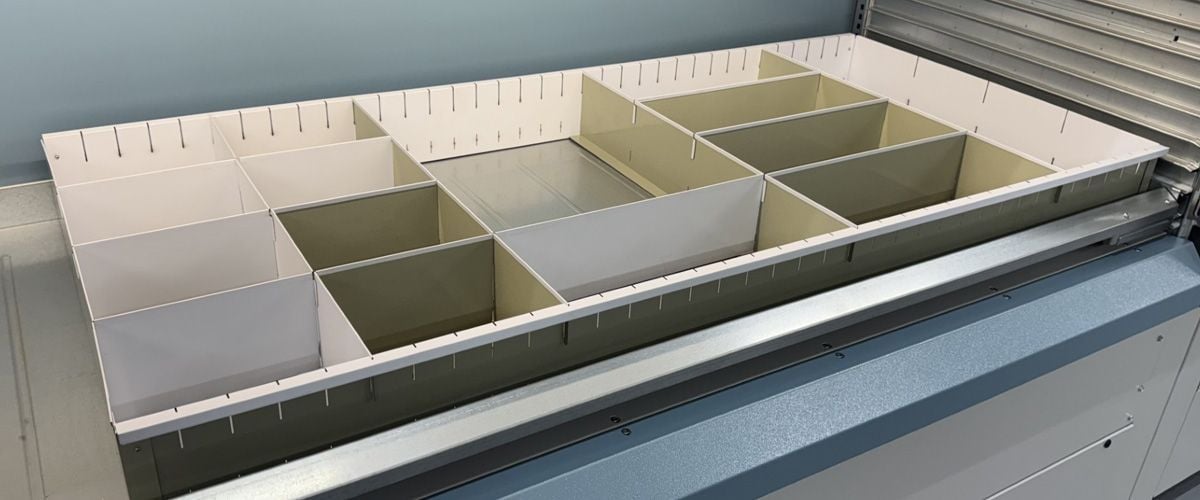
How to organise Kardex VLM trays: a practical guide to tray dividers
A Kardex vertical lift module (VLM) saves floor space and brings stock to the operator, but an open tray of loose parts can undo much of that efficiency. Parts drift out of position, pickers spend time searching, and it becomes harder to see what is actually in stock.
Dividing each tray into fixed, clearly defined compartments is one of the simplest ways to keep a VLM working as it should. This guide covers why tray organisation matters, the main types of tray divider, how to plan a layout, and what to check before you order.
Why tray organisation matters in a VLM
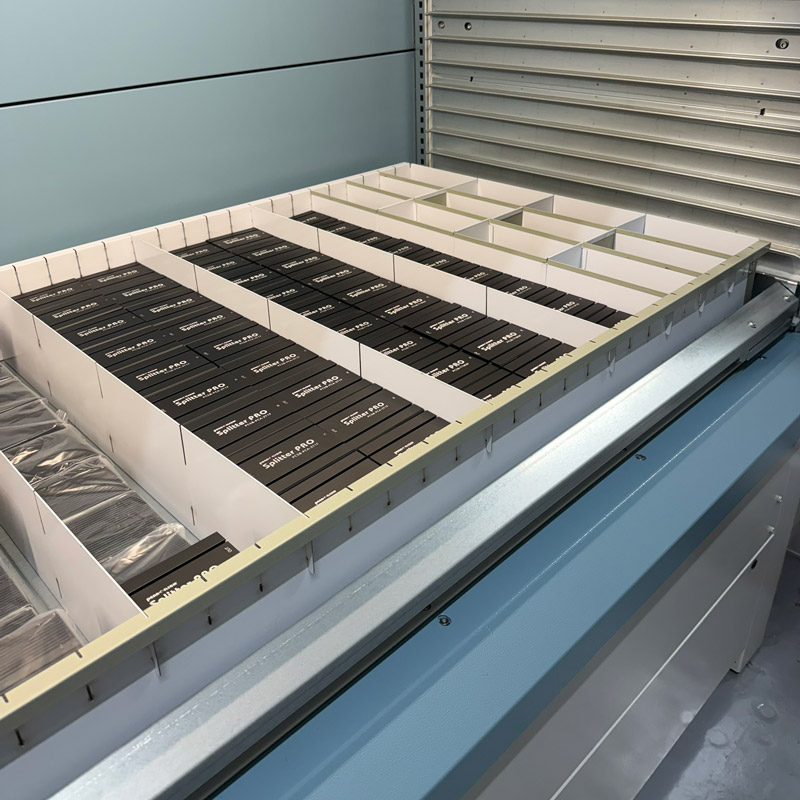
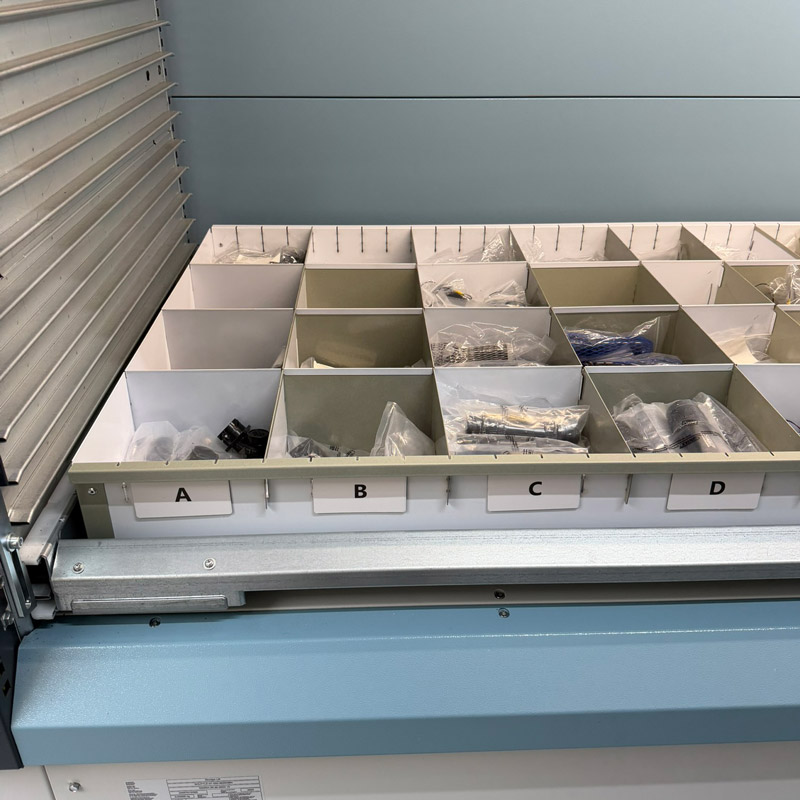
A VLM's software knows which tray an item is stored in, but not where it sits within that tray. Compartments close that gap, giving every part a fixed location that can be recorded and found again.
A well-divided tray helps in several ways:
- Pickers go straight to the right compartment rather than searching across the whole tray.
- Similar-looking parts stay separated, which reduces picking errors.
- Stock checks are quicker, because each compartment holds one part number.
- Parts stay in place when the tray moves in and out of the machine.
- New staff can find their way around the stores more easily when locations are consistent.
Choosing a divider type: plastic, hardboard or steel
There are three common ways to organise VLM trays.
| Type | How it works | Best suited to |
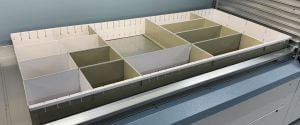
| Plastic bins | Individual boxes placed in the tray | Very small parts and visual stock checks |
| Coated hardboard or fibreboard | Slotted boards that interlock | Light stock where cost is the main factor |
| Steel divider systems | A steel frame with repositionable dividers | Heavier parts, frequent reconfiguration and long-term use |
Steel weighs more than plastic or hardboard, so the weight of the dividers needs to be counted against the tray's rated load. In return, steel walls hold their shape through daily picking and restocking, and the same components can be reused each time the layout changes.
The right choice depends on the size and weight of your stock, how often your range changes, and the load rating of your trays.
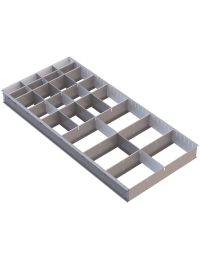
How a modular steel divider system works
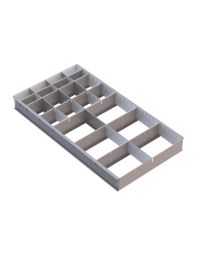
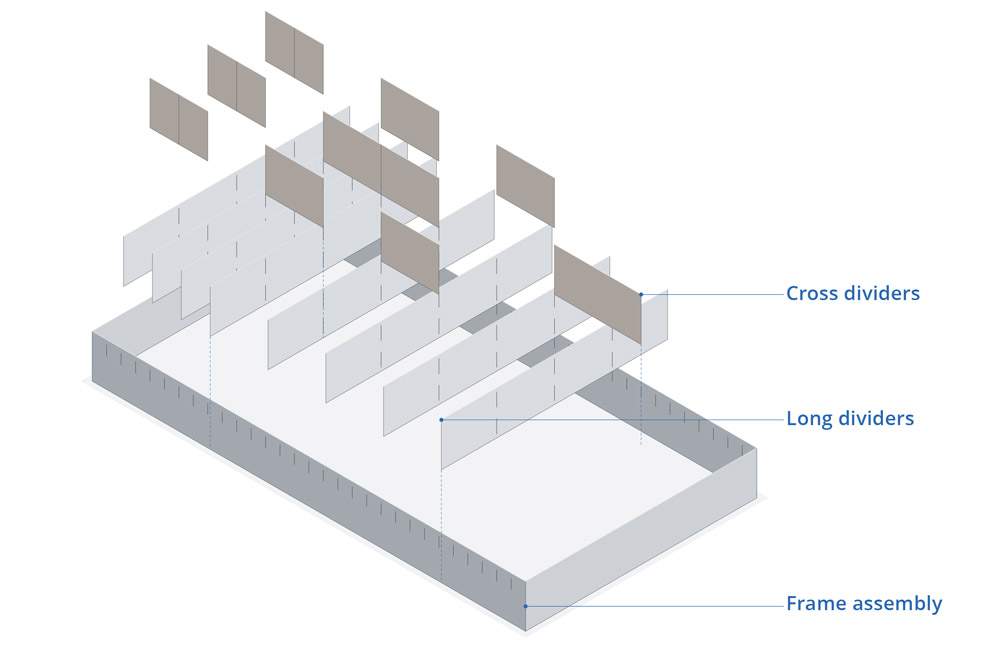
A modular system is built from three parts that locate together inside the tray. Using Penn Elcom's MDK system as the example:
- The frame sits inside the tray and forms a rigid perimeter. Its slotted inner faces set a 50mm grid for the long dividers.
- Long dividers run from front to back and create the main lanes. They can be moved across the frame in 50mm steps.
- Cross dividers clip between the long dividers to split each lane into compartments. Up to three fit in each lane, giving up to four compartments from front to back.
Because every position sits on a fixed grid, a layout can be planned on paper before anything is moved, then rebuilt whenever the stock profile changes.
Planning a tray layout
A little planning before fitting dividers saves rearranging later. These steps work for most Kardex installations:
- List the parts the tray will hold, with their approximate size and how often each is picked.
- Group parts of a similar size, so each lane can be set to a width that suits them.
- Put the most frequently picked parts towards the front of the tray, where they are easiest to reach.
- Sketch the layout on the 50mm grid, setting lane widths first and then compartment depths.
- Leave some spare capacity for new part numbers, so the layout does not need rebuilding every time the range grows.
- Record each compartment's location in your inventory system once the tray is built, so pickers are directed to the exact position.
What to check before ordering
Kardex tray sizes vary by model and age, so these checks help the dividers fit first time:
- Measure the internal width and depth of the tray at its base, inside any lips or flanges. The internal size must be equal to or larger than the frame's external size.
- Allow for the divider height, because a VLM stores each tray according to the height of its contents, so taller dividers need more vertical space in the machine.
- Add the weight of the divider system to the weight of the stock, and check the total is within the tray's rated load.
- Check whether the system arrives flat-packed, and allow time to assemble it on site.
If you are unsure which size suits your machine, have your Kardex model and tray dimensions to hand when you ask a supplier.
MDK modular tray dividers from Penn Elcom
The MDK modular tray divider system is Penn Elcom's steel divider range for Kardex VLMs. Frames and dividers are made from 0.7mm steel, with a 150mm frame height.
| Kit | Nominal tray size | Frame external size | Kit weight |
| MDK15-150X80 |
1500 x 800mm | 1503 x 804mm | 16.99kg |
| MDK15-180X85 | 1800 x 850mm | 1803 x 854mm | 18.18kg |
Each kit includes a frame, eight long dividers and 24 cross dividers in four lengths. Every component is also sold separately, with cross dividers from 50mm to 500mm in 50mm steps, so you can start with one tray, extend a layout, or replace a single part.
MDK is used for maintenance spares, engineering and production components, tooling and consumables, kitting for assembly lines, service parts, and warehouse stock for order fulfilment. It can also be used in other VLMs and storage carousels whose trays have suitable internal dimensions and enough height clearance.
Penn Elcom has manufactured metal products since 1974, and offers custom manufacturing for trays outside the standard sizes.
Frequently asked questions
How do I organise the trays in a Kardex VLM?
Divide each tray into fixed compartments using plastic bins, hardboard dividers or a steel divider system, group parts by size, and place the most frequently picked items towards the front. Record each compartment's location in your inventory system so pickers are directed to the exact position.
Are steel tray dividers too heavy for a VLM tray?
Not usually, but the weight counts towards the tray's rated load. A full MDK kit weighs 16.99kg or 18.18kg depending on tray size, so check the combined weight of dividers and stock against the load rating for your Kardex model.
How often can I change a tray layout?
As often as your stock changes. With a modular steel system, the same dividers are moved to new positions on the grid rather than replaced.
Do tray dividers work in VLMs other than Kardex?
MDK dividers are designed for Kardex VLM trays, but can be used in any vertical lift module or storage carousel whose trays have suitable internal dimensions and at least 150mm of height clearance.
Are MDK tray dividers a Kardex product?
No. MDK tray dividers are designed and supplied by Penn Elcom for use with Kardex vertical lift modules. Penn Elcom is not affiliated with Kardex.
For help choosing the right kit, contact the Penn Elcom team with your machine model and tray dimensions.
Kardex is a registered trademark of its respective owner. Penn Elcom is not affiliated with or endorsed by Kardex. Brand names are used only to describe product compatibility.